
26 Apr, 2026
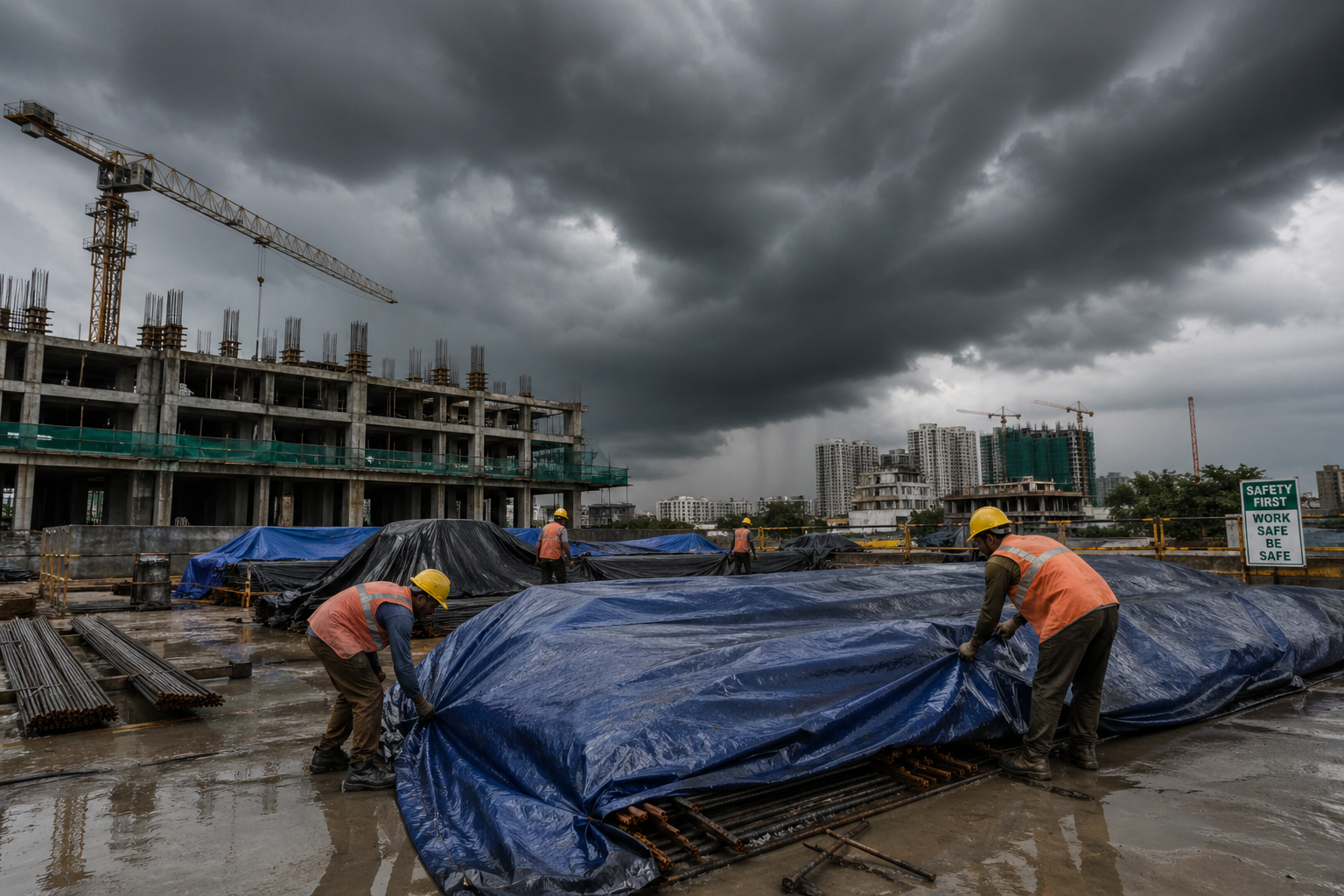
In India, the monsoon season brings relief from the blistering summer heat, but for the construction industry, it introduces a tidal wave of unique challenges. Heavy rains, high winds, and lightning can turn a well-organized site into a hazardous zone in a matter of minutes. At Lemoon India, we know that project timelines are tight, but cutting corners during the rainy season is a recipe for disaster. Preparing your site before the first drop falls is the cornerstone of effective monsoon construction safety.
Here is how we proactively secure our projects, protect our materials, and most importantly, keep our workforce safe during the unpredictable monsoon months.
1. Water Management for Monsoon Construction Safety
Waterlogging is the enemy of structural integrity and site accessibility. Before the monsoon fully hits, site managers must ensure that water has a clear, unobstructed path away from excavated areas and foundations.
- Clear the Trenches: Ensure all drainage channels, catch basins, and gutters are completely clear of debris, mud, and construction waste.
- Deploy Dewatering Pumps: Keep heavy-duty, well-maintained submersible pumps on standby. Test them weekly to ensure they are ready to handle sudden, massive influxes of water.
- Slope the Soil: Grade the soil around foundations and trenches to naturally direct rainwater away from vulnerable structural points.
2. Secure Scaffolding and Temporary Structures
As we discussed in our recent Daily Toolbox Talks (TBT) on Working at Height, elevation brings risk. Add torrential rain and gale-force winds, and that risk multiplies.
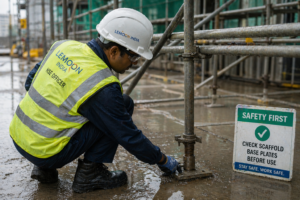
- Reinforce Foundations: Rain softens the ground. Base plates and sole boards of scaffolding must be frequently inspected to ensure they haven’t sunk or shifted in the mud.
- Tie Down Loose Items: High winds can turn loose planks, tools, and lightweight materials into lethal projectiles. At the end of every shift, all loose items must be lowered to the ground or tightly lashed down.
- Halt Work During Storms: Lemoon India enforces a strict policy: if lightning is spotted or wind speeds exceed safe operational limits, all high-elevation and crane work halts immediately.
3. Electrical Rules for Monsoon Construction Safety
Water and electricity are a fatal combination. Electrical safety must be escalated to the highest priority level during the monsoon.
- Elevate and Cover: All distribution boards, generators, and electrical panels must be elevated above potential flood levels and covered with waterproof canopies.
- Inspect Insulation: HSE officers must daily inspect all exposed cables for cracks or fraying. Any damaged cables must be replaced immediately, not just patched with tape.
- Use ELCBs and RCCBs: Ensure Earth Leakage Circuit Breakers (ELCB) and Residual Current Circuit Breakers (RCCB) are installed and fully functional to instantly cut power in the event of a short circuit or ground fault.
4. Protect Your Materials from the Rain
Material degradation not only costs money but can also compromise the safety and quality of the final build.
- Elevate Cement and Steel: Never store cement bags or steel reinforcement bars directly on the ground. Use wooden pallets to keep them elevated from ground moisture.
- Waterproof Covering: Cover cement, steel, and wood with heavy-duty, waterproof tarpaulins. Ensure the tarps are securely tied down so they aren’t blown away by storm winds.
- Monitor Moisture: For interior work, ensure that moisture doesn’t get trapped in newly constructed walls or freshly poured concrete slabs, which can lead to long-term fungal and structural issues.
5. Worker PPE and Monsoon Construction Safety Protocols
Monsoon construction safety ultimately comes down to the people on the ground. Wet conditions lead to slips, falls, and health crises if not managed properly.
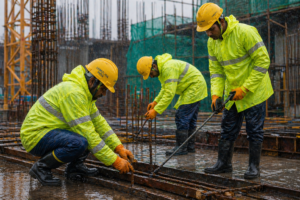
- Monsoon-Specific PPE: Standard safety shoes are not enough in thick mud. Workers must be provided with high-traction, anti-slip rubber gumboots and high-visibility waterproof rain gear.
- Vector-Borne Disease Prevention: Stagnant water breeds mosquitoes. Regular site fumigation and clearing of small water-holding containers (like empty paint buckets or tires) are mandatory to prevent Dengue and Malaria outbreaks, as recommended by global health authorities.
- Sanitation: Provide dry, clean resting areas for workers to take shelter during heavy downpours, along with access to clean drinking water to prevent waterborne diseases.
Conclusion
The monsoon season does not have to mean a complete standstill for your project. With rigorous planning, proactive equipment maintenance, and an unwavering commitment to worker safety, you can weather the storm efficiently. At Lemoon India, we engineer our safety protocols to be as resilient as the buildings we construct.
By prioritizing monsoon construction safety, we protect our people, our materials, and our clients’ investments. Want to learn more about our commitment to site safety? Contact the Lemoon India team today.

Have any Design
Support
contact
