
26 Apr, 2026
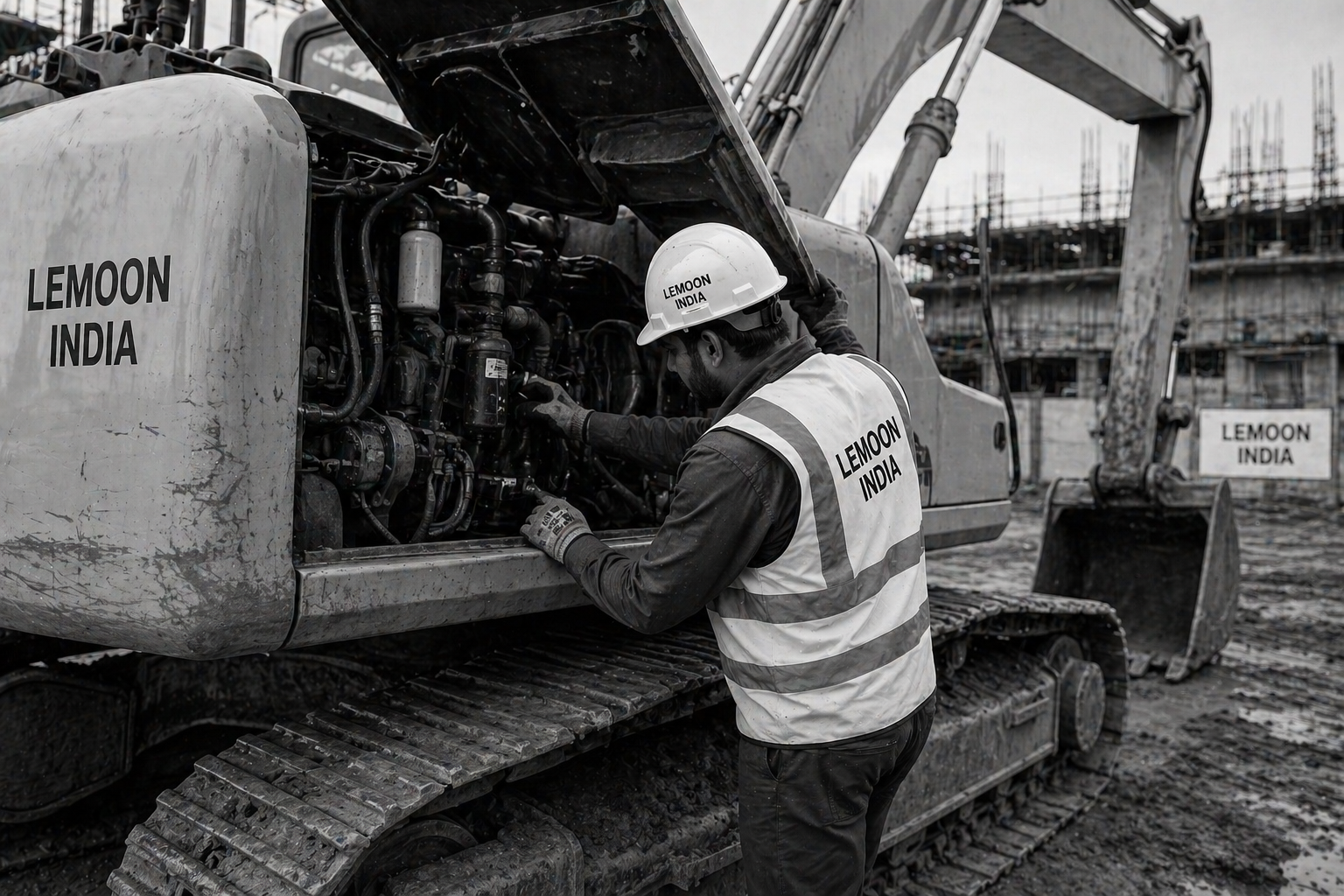
On any commercial construction site, your excavators, cranes, loaders, and bulldozers are the beating heart of your operations. When a critical piece of equipment breaks down, the entire project grinds to a costly halt. At Lemoon India, we know that reactive repairs are a massive drain on project budgets. That is why implementing a strict, proactive routine for heavy machinery maintenance is non-negotiable on all of our sites.
Proper equipment care extends the lifespan of your fleet, protects your workforce from mechanical failures, and ensures you hit your project deadlines. Here is the ultimate checklist we use to keep our site machinery running efficiently.
Why Heavy Machinery Maintenance Matters
Waiting for a machine to break before fixing it is a dangerous strategy. According to global heavy machinery safety guidelines, a massive percentage of equipment-related accidents are caused by preventable mechanical failures (like blown hydraulic hoses or failed brakes).
Furthermore, just as we strategize to reduce construction waste, maintaining your machines ensures they run at peak fuel efficiency, cutting down on unnecessary diesel costs and environmental emissions.
The Daily Heavy Machinery Maintenance Checklist
Before the ignition is ever turned on, operators must perform a visual and functional walk-around. We make this step a mandatory topic during our Daily Toolbox Talks (TBT). Operators should check for:
- Fluid Levels: Check engine oil, hydraulic fluid, transmission fluid, and coolant levels. Low fluids are the fastest way to destroy an engine.
- Tires and Tracks: For wheeled loaders, check tire pressure and look for deep gouges. For tracked excavators, ensure the track tension is correct and clear out trapped mud or debris.
- Leaks and Puddles: Look under the machine. A fresh puddle of oil or hydraulic fluid is a clear sign that a seal has blown and the machine must be grounded.
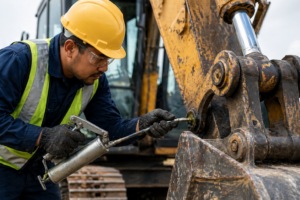
- Greasing: Heavy friction points (like boom arms and bucket pins) require fresh grease daily to prevent metal-on-metal grinding.
Weekly and Monthly Deep Checks
While daily checks catch immediate dangers, comprehensive heavy machinery maintenance requires deep inspections on a scheduled basis.
- Filter Replacements: Construction sites are incredibly dusty. Air, fuel, and cabin filters must be cleaned or replaced weekly to prevent engine choking.
- Battery Health: Inspect battery terminals for acid corrosion and ensure the tie-downs are secure so the battery doesn’t vibrate loose during operation.
- Brake and Steering Tests: Test all emergency stops, parking brakes, and steering columns in a safe, cleared area before moving into the active construction zone.
Integrating Tech into Heavy Machinery Maintenance
The days of tracking maintenance on paper clipboards are fading. Just as we utilize the benefits of BIM in construction to digitally plan our structures, modern machinery now comes with telematics. These digital sensors alert project managers to engine temperature spikes, dropping fluid pressures, and upcoming service milestones in real-time. By utilizing these digital dashboards, we move from preventative maintenance to predictive maintenance.
Conclusion
A well-maintained fleet is the backbone of a safe, profitable construction site. By strictly adhering to a heavy machinery maintenance schedule, Lemoon India protects our operators, honors our project timelines, and delivers uncompromising quality on every build.
Are you looking for a highly disciplined construction firm to manage your next large-scale commercial project? Contact Lemoon India today.

Have any Design
Support
contact
