
26 Apr, 2026
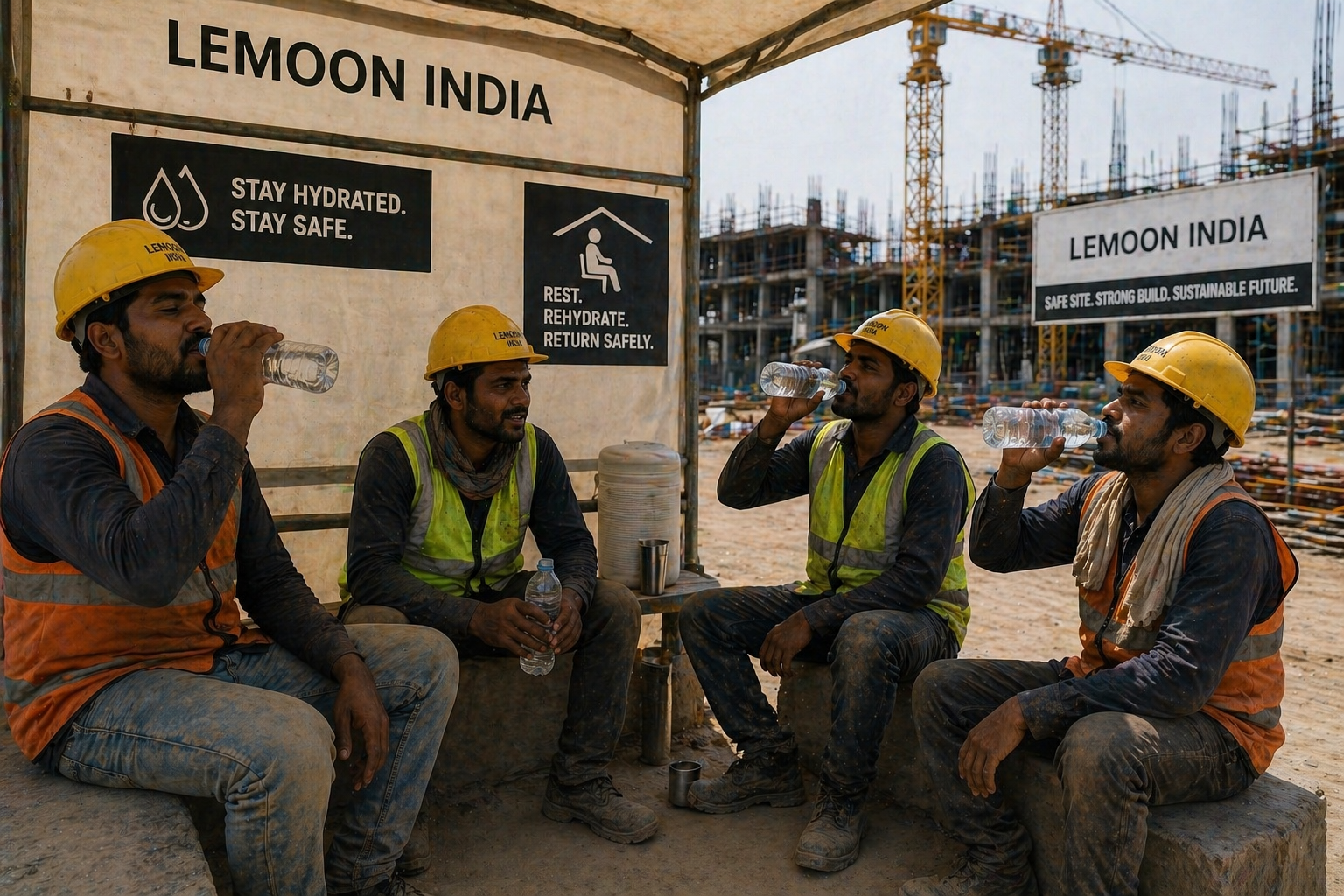
Indian summers are notoriously unforgiving. When temperatures soar above 40°C (104°F), a building site can quickly become a hazardous environment. While we often focus on mechanical hazards like scaffolding falls or heavy machinery maintenance, environmental dangers are just as lethal. At Lemoon India, protecting our workforce from heat stress in construction is a critical priority during the summer months.
Heat exhaustion and heat stroke can lead to severe accidents, decreased productivity, and fatal health crises. Here are the proactive protocols we enforce on our sites to keep our teams safe, hydrated, and healthy when the heat wave hits.
Understanding Heat Stress in Construction
Before you can prevent it, site supervisors must be able to recognize the symptoms. According to global health and safety guidelines from OSHA, occupational heat exposure is a preventable danger. Supervisors must be trained to spot the difference between standard sweating and a medical emergency:
- Heat Exhaustion: Symptoms include heavy sweating, extreme weakness, dizziness, nausea, and clammy skin. A worker experiencing this must immediately move to the shade and hydrate.
- Heat Stroke: This is a severe medical emergency. Symptoms include a cessation of sweating, red/hot/dry skin, confusion, and fainting. Emergency medical services must be called immediately.
1. Hydration is Non-Negotiable
When working in intense heat, the body loses massive amounts of fluids and electrolytes. Thirst is actually a late indicator of dehydration. We enforce a strict hydration schedule on our sites, requiring workers to drink a cup of cool water every 15 to 20 minutes, regardless of whether they feel thirsty. Furthermore, we provide electrolyte-infused water (like ORS solutions) at all hydration stations to replace vital minerals lost through sweat.
2. Smart Scheduling to Prevent Heat Stress in Construction
We cannot control the weather, but we can control our schedules. During peak summer, Lemoon India adjusts working hours to avoid the most brutal heat of the day (typically between 12:00 PM and 3:00 PM).
By shifting heavy, physically demanding tasks—such as manual excavation or pouring large concrete slabs—to the early morning or late evening, we drastically reduce the physical strain on our workforce.
3. Mandatory Shaded Recovery Zones
A few minutes out of the sun can completely reset a worker’s core body temperature. We construct dedicated, well-ventilated shaded resting areas across our project sites. These zones are equipped with industrial cooling fans and an endless supply of clean drinking water. Workers are encouraged to take micro-breaks whenever they feel fatigued.
4. Daily Education via Toolbox Talks
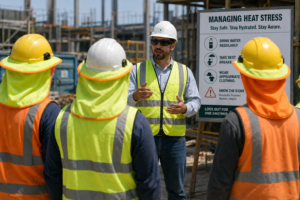
Just as we use our Daily Toolbox Talks (TBT) to discuss high-elevation risks, we pivot these briefings to focus heavily on the weather during the summer. We train our crew on the “Buddy System”—pairing workers up so they can monitor each other for early signs of heat fatigue, slurred speech, or stumbling.
Conclusion
Building high-quality commercial structures should never come at the cost of human health. Managing heat stress in construction requires vigilance, flexibility, and a deep commitment to your workers’ well-being. By prioritizing hydration, smart scheduling, and daily education, Lemoon India ensures our teams stay safe all year round.
Are you looking for a construction partner that puts safety and quality above all else? Contact Lemoon India today.

Have any Design
Support
contact
